
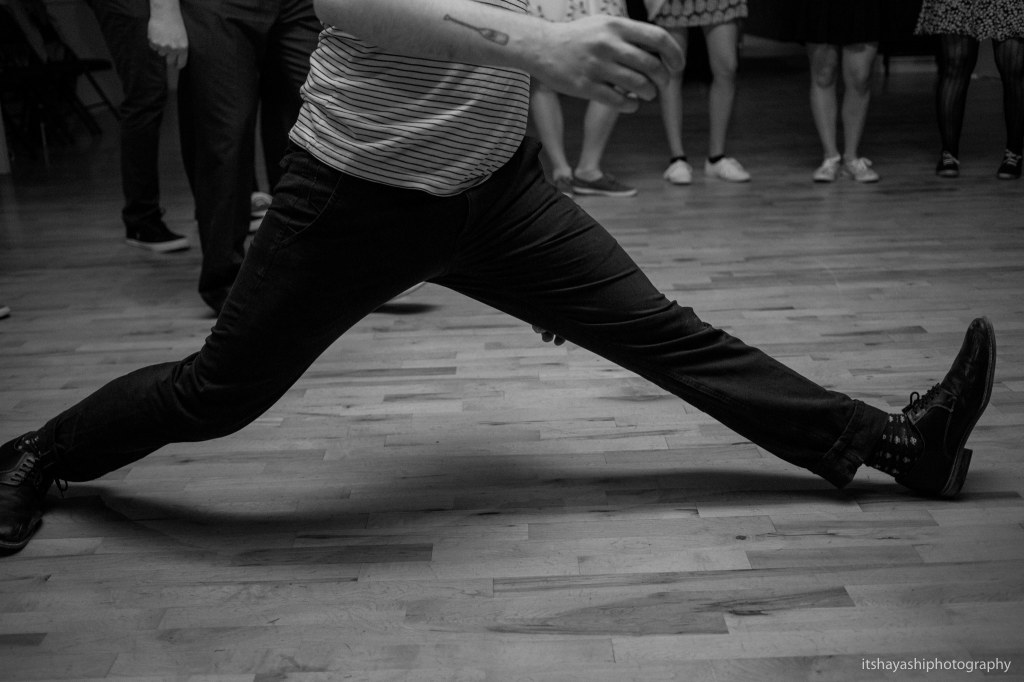
Eons ago it seems, when I was young and in still University, I went to visit a girlfriend of mine who worked at a local coffee shop. And when I walked in, wouldn’t you know it, there behind the counter stood a smiling gentleman in a newsboy cap, ready with a wave and familiar hello.
“Hi!” I said back, “What’s up?”
We talked for a bit, I ordered a coffee, and then I sat to wait for my friend.
“How do you know Turlough?” she asked when she finally sat down, already deep into a latte.
“Actually…I don’t. We only just met today.”
But that’s Mr. Turlough (think, ter-lock) Myers for you: always ready and waiting with an inviting grin that could make even a poor second-year comfortable in the middle of a bougie downtown café. And while I have (in the years since) gotten to know much more of Turlough outside of that old haunt, it wasn’t until I put out a recent call to local artists and connoisseurs for interviews that I learned why it was that I’d always felt so comfortable in his presence: because both of us are always already dancing. And we always have been.
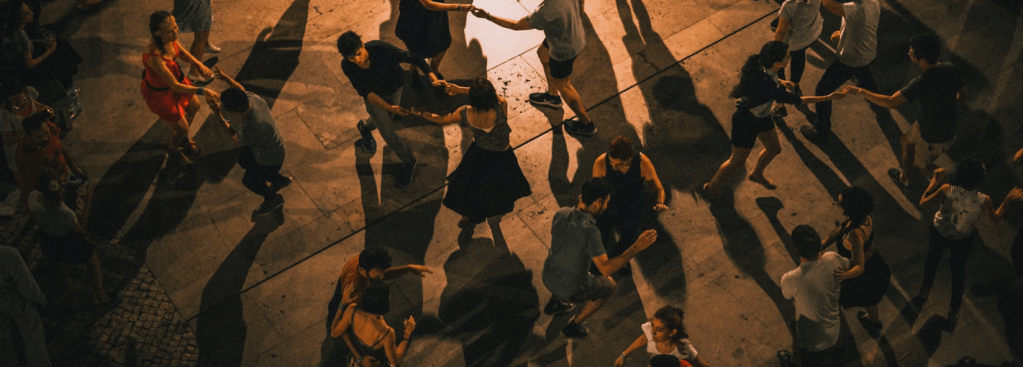
Oh yes, dear reader: you may see me as only the writer-next-door, but when I put down the pen, you can bet I’m blasting something that’s slowly making my downstairs neighbours insane, my bookshelves tilting dangerously with each step.
And yet, in all my continued love for dance, when I sat down (accordingly, in a socially-distanced phone call) with Turlough during said interview, I learned that dance can be so much more than just footwork and feeling. In fact, in his view, “it’s a lifestyle…almost a system of morals.” To him, dance—and more specifically, his method for teaching his favorite style of dance, The Lindy Hop—can break down barriers, give people confidence, and can even connect us with a piece of history we wouldn’t have access to otherwise.
But let’s be serious: can Lindy Hop really be all that and a pair of dance shoes?
In search of an answer (my curiosity sparked and ready) we set up our chat to explore this philosophy. And in return? I found true human connection, even amid a pandemic.
So, even if you’re flimsy on your feet, it’s time to buckle in and learn the steps to get you out on the dance floor (even if just in your living room) thanks to Turlough Myers: the local Lindy Hopper keeping Edmonton tap-tap-tapping our toes!
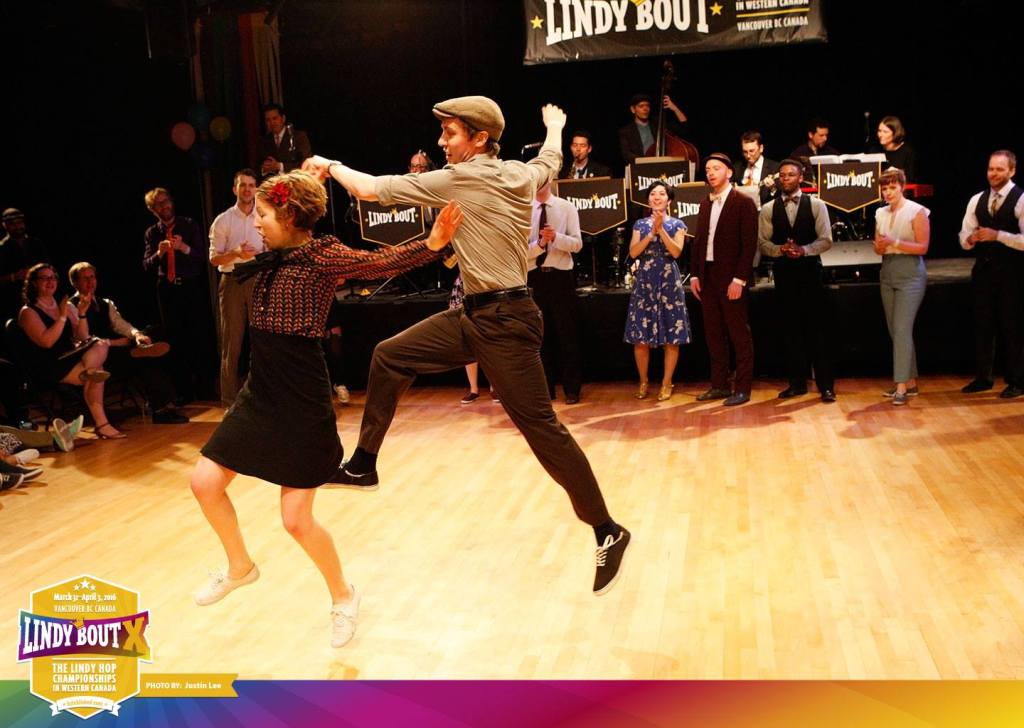
Trust, Self-Construal, and the Philosophy of Dance: A Conversational Interview with #YEG Lindy Hopper, Turlough Myers
Jessica (J): So, I already know that you’re my personal favourite of Edmonton’s many prolific Lindy Hoppers, but I’ve always wondered: how did you end up becoming a part of our local dance scene?
Turlough (T): That’s a great one to start! I mean, originally I was dancing in a much smaller pond. I already loved dance, and swing in particular, but I knew that to be challenged I would have to travel. So, I moved to Montreal. I started working at this dance studio called Cat’s Corner, and there, I began to gain momentum really quickly dancing the Lindy Hop, and then teaching it, too.
Before long I was teaching outside of Montreal, I was getting hired in big cities like Toronto, and began winning competitions alongside a great team of dancers from all around Canada. Then, almost six years ago now, someone had this idea that I pitched to Sugar Swing’s head director at the time—that I would come teach dance—and though it was just supposed to be a six-month contract, I’m…well, as you can see I’m still here!
J: Wow! Okay so no big deal, you’ve danced all over Canada and now you’re up North with us Edmonton folk. That’s quite the wild ride! Why do you think you found all that success so quickly?
T: Interesting question. Hm.
Well, off the bat I can point to the method I was using to teach dance, and to teach Lindy Hop. It actually ended up being my method for teaching dance that I think made me the most successful. In my method, people get very comfortable with themselves really quickly, which allows them to progress to a high skill level quickly as well. Of course, back then I had my fair share of nay-sayers, and people had really varied reactions to my teaching since it kind of challenged the status quo. But I kind of can’t help it. I enjoy using a method that starts with a dancer facing their own fear of vulnerability head on.
It all starts with the music and the history before the steps, you know?
J: History? Of swing you mean? Or just Lindy Hop? If I’m being honest I don’t know much about it or its history, except that it looks really technical!

T: That’s actually the barrier I like to break down with dancing! A lot of people will really put their guard up when it comes to putting in the footwork; they think it’s really performative. But that’s not it at all. And what I show my students is that Lindy Hop’s roots come from the African American community celebrating the end of slavery, and celebrating a lack of segregation. It’s literally about partying! So, when I say my method of teaching dance starts with history, I mean that I’ll—say—show people old clips of Lindy Hop, or tell them where it originated (Harlem in the late 1920s, if you’re wondering) long before I ever partner them up to learn their first swing steps. Almost immediately, people feel they are a part of something bigger than themselves, and from there they are much more willing to connect with the dance itself.
J: What?! I’m honestly so surprised, I didn’t know that part of its history at all! And you’re right, connecting it like that really gets my curiosity going. Like it’s almost intuitively easier to draw the line from Lindy Hop back to myself and my own narrative. So, for my own sake (and for future readers) what kinds of videos should we be googling to learn more?
T: Oh, jeez, just start with Frankie Manning. Anything by him: interviews, books, watching him dance, his rise to stardom. His life is a total celebration of Lindy Hop as an art form, and I think watching him really changes peoples’ perspectives on how to approach dance. He also has a memoir called Ambassador of Lindy Hop, and every Lindy Hopper should read it.

J: Alright, so you start with the history, and with the music—which I know you’re very adamant must be a certain type of music-
T: Oh yes, the music is a must. I think it’s kind of – it’s non-negotiable. It has to be a certain way. A lot about Lindy Hop is about personalization, but the music has got to swing; it has to have rhythm, and it has to have feeling. It’s such happy music—it’s such uplifting music, and the dance follows that. Like, the dance is something that is preceded by the music, not the other way around. There are other people who teach that dance comes first, but in my opinion that method is wrong and borderline racist.
Besides, when the revivalists were taught to dance Lindy Hop in the 80s and 90s by the African-American folks (like Frankie) who danced it, they gave us a gift, which was a place in their community. And if we are going to take that gift and stomp on it by using different music, it’s a great insult to the gift that they gave us.
So…really the Lindy Hop is a dance form that arose from the black community’s own swing movement, and there’s a responsibility to that history for anyone who wants to participate in it as an art form.
J: I agree completely, and I imagine that those other methods—where they teach using different music, and focus on the steps more—result in some really rigid dancers. And I guess that leaves me wondering how else your method differs from the way you’ve seen Lindy Hop being taught elsewhere?
T: Great question! Honestly, I’ve spent a ton of time on calls where people ask me this; they want to know how what I do is different from what others are doing. So what I do is to take away the idea that people need to start with specific basic steps, and instead invest in them personally. A lot of people have a barrier in their lives, and most teachers think that they are going to scare people away when you show them the pain of racial injustice that Lindy Hop was born out of; but in my experience, people really want to be a part of it, and they want to know.
In fact, I think a big part of what makes Lindy Hop really wonderful is that it is a partner dance where there is no imbalance of control. The line between lead and follow is a giant grey area when it’s done properly. It’s inherently collaborative, and there’s a lot to take away about life with that in mind. So, my method again, is investing in these people as human beings by teaching them about the history, getting them connected to the form, showing them that its possible for them to learn to be good at this, and then once they have belief in themselves, moving into the nitty gritty.

J: But what about those of us who’ve been told (or who have told ourselves) that we “can’t dance”? How do you manage that in your method?
T: I would likely ask those people why they think that person said that to them, or why they’ve told themselves that. No one needs that kind of negativity in their life (haha)! So, asking them, what did you or the other person have to gain by telling you that?
Because to be honest, I’ve been told that in my life. And then when I became really gung ho on being a Lindy Hop teacher, I had a lot of people tell me no, that I wasn’t good enough to teach. But I think they just felt threatened because my method challenged the very foundation of the social structure that some white instructors had benefited from. These are the same folks who wouldn’t even acknowledge the dance’s roots, or who would teach it in a way that eliminated that aspect of equality I was talking about earlier. My model—and really, dance itself—it’s a lifestyle. A moral system.
J: Like…an equalizing force?
T: Exactly! Exactly. People end up amazing themselves with what they’re capable of when they let go of that “lead-follow” frame of mind. So, part of that is also helping people unlearn their preconceived notions.
Talking about those ‘technical’ steps again, when you hear that Lindy Hop is a swing dance, you’re thinking about Boogie Woogie and the Jive, you’re thinking about your counted steps and the structure of it all, and you get stuck thinking “I can’t”. People won’t learn to be self-confident unless they learn Lindy Hop in a way that is conducive to freedom, expression, and not putting boundaries on that.
J: Jeez, this is some powerful stuff. Thank you so much for sharing. I’m really thrilled to have this kind of history explained to me, and now that I can attach myself better to it. And I am always trying to learn in solidarity with non-white populations, so that helps!
Basically, what I’m trying to say is that I can see why your method is so successful with students, and why you consider it almost a philosophy. I’m also grateful that you’re making the history known among a really diverse population. I bet some of those classes are filled with people from all walks of life!
T: There are definitely some fun and interesting people who join us every week!
J: Speaking of which, are you still teaching classes right now? I imagine it could be a difficult time for social dances, what with distancing and all.
T: Yes, as you can guess things have slowed a bit. But when COVID isn’t happening, Sugar Swing for instance has social dances twice a week that are just open, nonjudgmental, non-competitive, no-strings-attached social dances, and then every night of the week there are lessons.
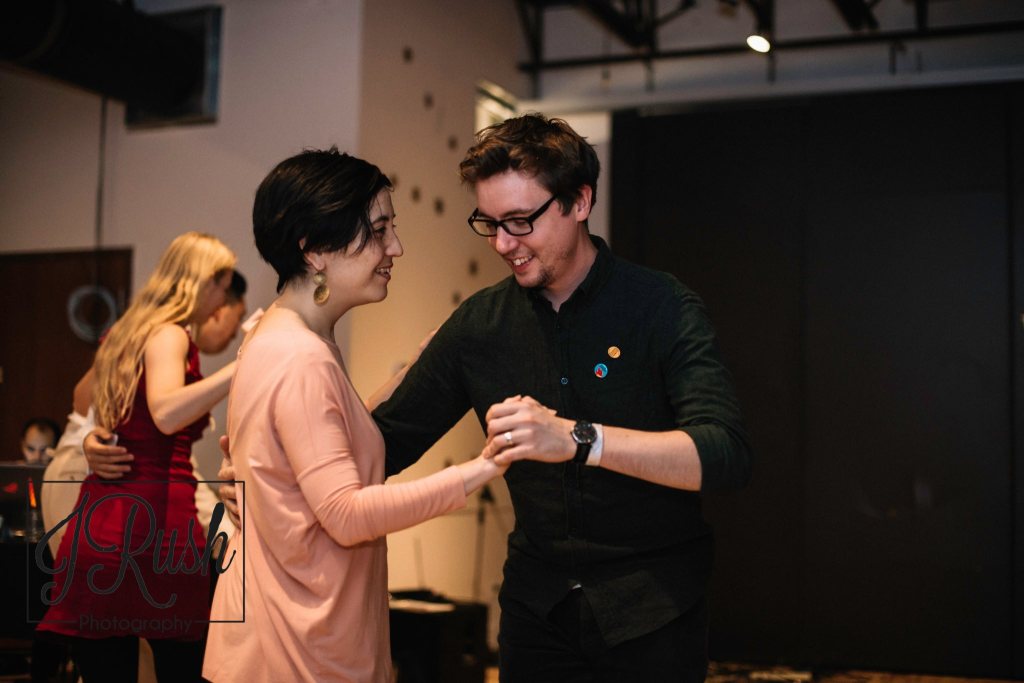
Honestly, we have such a great and committed staff of people who love working with students. The mission is to basically spread and share a mutual love of Jazz and Swing, and I think it’s the best place in the city to do it. They even have these great events every year (which have been unfortunately cancelled) like Lindy Harvest and the Summer Harvest which are so so important to our dance community.
J: Do you miss it?
T: Well of course, but I will say that Lindy Hop has become a much smaller priority in my life. I have a new job as Patron Advisor at the Winspear and a newborn, and I’m finding that although I miss the people a ton, that I haven’t missed teaching as much as I thought I would.
These days I’m really invested in my work, and bringing that philosophy with me into other areas of my life. And of course, my family is number one until kingdom come! We’ve even made some time at home for dance, and lately I’ll put baby Ellie in the carrier and my wife and I will dance with her. We listen to music a lot at home too, and I think when you listen to swing music a lot, it does something to you. It’s impossible to hear it without wanting to move and be in motion!
J: Hear, hear! I’ll raise my coffee to that! Amazing. I feel I’ve learned so much and I can’t wait to go check out Frankie Manning and learn more about him!
T: I’d say check out “Never Stop Swinging”, a tribute to him that was made right before he passed. It’s pretty powerful, and just shows what an inspiration he really was!
J: Don’t mind if I do! Anything else you want to add for your new ‘fans’?
T: Just that my method—surrounding dance—is something that should be shared. It wasn’t designed to be exclusive, it was designed for the growth of dance excellence. I want that to be available to everyone, so I am thankful that you’re putting it out there!
J: Hey! That’s all you—I’m but a conduit.
But seriously, thank you SO much for sitting down with me Turlough. This has been so very eye opening, and I’ve already clicked through to YouTube to get started on my Lindy Hop education! My partner and I will have to tap you for some lessons soon, and I just can’t wait to get MOVING.
T: You’re always welcome, and you know it. That goes for anyone else reading, too: Dance on!

Curious about Sugar Swing in Edmonton?
You’re in Luck! Starting July, Sugar Swing will begin offering a small number of classes to finish off this pandemic summer. More classes will become available for enrollment as well, for classes starting in September onward.
Based in Edmonton, Alberta, Sugar Swing (2005) offers swing dance classes (Lindy Hop, Blues, Balboa) and dance events. The primary goal of Sugar Swing is to encourage a social atmosphere and to promote a warm, welcoming environment for all people. Sugar Swing is open to anyone: no partners required, no dance experience necessary, and no age boundaries! We bring people together by offering classes and events. We involve the public by frequently performing and teaching outside of our ballroom’s walls. Our services provide a platform for both artistic expression and social gathering. Click here to get to know our wonderful staff and instructors.
From Wikipedia’s entry on Lindy Hop:
“Lindy Hop is an American dance which was born in the African-American communities in Harlem, New York City, in 1928 and has evolved since then. It was very popular during the swing era of the late 1930s and early 1940s. Lindy was a fusion of many dances that preceded it or were popular during its development but is mainly based on jazz, tap, breakaway, and Charleston. It is frequently described as a jazz dance and is a member of the swing dance family.
In its development, the Lindy Hop combined elements of both partnered and solo dancing by using the movements and improvisation of African-American dances along with the formal eight-count structure of European partner dances – most clearly illustrated in the Lindy’s basic step, the swingout. In this step’s open position, each dancer is generally connected hand-to-hand; in its closed position, leads and follows are connected as though in an embrace on one side and holding hands on the other.”